Designing for Safety: The Role of Food and Hygiene Standards
Manufacturers and maintenance teams are navigating increasingly stringent regulatory requirements, reflecting long-term changes in the manufacturing landscape rather than short-term challenges.
According to the World Health Organization, it’s estimated that around 600 million people worldwide – almost 1 in 10 – fall ill every year from eating contaminated food, leading to about 420,000 deaths annually.
Integrating food-grade machinery into existing production lines helps prevent contamination, safeguard public and employee health, and strengthen brand credibility.
In this article, we explain the importance of food safety and how design decisions directly impact hygiene and consumer trust.
Understanding Food Hygiene Standards
What are food hygiene standards? According to the World Health Organization, the definition of food hygiene standards is “the conditions and measures necessary to ensure the safety and suitability of food at all stages of the food chain, including production, processing, storage, distribution, and preparation.”
When referencing food hygiene standards in relation to machinery, references are to hygienic design. Hygienic design is essential for preventing contamination in food production, and with the implementation of regulations, solutions are constructed to prevent infection and contagion.
So, what are the food hygiene regulations and guidelines that food production solutions must adhere to?
The Key Food Hygiene Regulations and Guidelines
Key hygiene regulations and guidelines should be upheld. In modern food production, machinery and equipment should adhere to the US federal food safety framework, such as:
- Food Safety Modernization Act (FSMA)
- Federal Food, Drug, and Cosmetic Act
- Good Manufacturing Practices (GMPs)
- USDA-FSIS Requirements (where meat, poultry, or certain egg products are involved)
These Food Safety Modernization controls require solutions to be cleanable and inspectable. Whereas, GMPs provide the guidelines for material choice, access for sanitation, and requirements for documentation.
Why Compliance Matters for Public Health and Businesses
Compliance matters for businesses. By implementing hygienic food production solutions into your existing production line, businesses avoid legal and financial penalties, boost operational efficiency, and contribute to sustainable goals.
Businesses that implement food production systems with strict hygiene standards gain a competitive advantage over those that do not. Customers are more likely to invest because these standards help safeguard brand reputation and build trust.
More than 70% of consumers are increasingly drawn to brands that prioritize food safety and transparency, according to data from Label Insight. [training.safetyculture.com]
Maintaining public health, food safety, and hygiene standards in food production machinery ensures peak product quality while enhancing workplace wellbeing by reducing the risk of harm.
The Link Between Design and Food Safety
From custom machinery design and layout to workflows and efficiency, machinery design is fundamental in supporting food safety and upholding hygiene standards. For example, any design flaw can lead to sanitation failures, and every additional bolt, seam, or manual intervention is an opportunity for contamination.
But how can machinery design, choice of materials, and workflows prevent contamination risks?
How Design Layout, Materials, and Workflows Affect Contamination Risks
Through layout, materials, and workflows that adhere to hygiene standards and design principles, risks of contamination are reduced. These design principles overall improve product safety and reduce downtime and recalls.
Opt for the following design layouts, such as:
- Traffic flow: Implementing a layout that provides efficiency ensures that employees working on the floor, tools, and materials do not cross and can not create dirty zones, which lead to cross-contamination.
- Airflow: Proper ventilation limits the spread of airborne contaminants to high-risk areas.
- Zoning and segregation: Visible separation zones between raw and finished products can eliminate cross-contamination risks.
Materials that prevent contamination and adhere to hygienic regulatory standards are as follows:
- Porous materials: Avoid using porous materials that can easily crack or trap moisture and bacteria.
- Material compatibility: Food production machinery should feature surfaces that withstand heat, chemicals, and frequent washdowns without cracking or breaking down.
- Smooth, non-absorbent, and corrosion-resistant materials: Choose stainless steel food production machinery that prevents contamination and resists corrosion.
Implement the following workflows to increase hygienic food production:
- Employee movement: Ensure that there are consistent gowning and handwashing practices that limit contaminants from traveling between areas.
- Cleaning procedures: Defined and increased sanitation and personal hygiene workflows reduce the amount of residues left behind.
- Manual handling: Opt for solutions that reduce excessive touchpoints; this decreases the chance of introducing human contaminants.
How does F.N. Smith support the hygiene of food production with design elements?
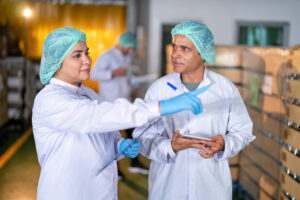
Key F.N. Smith Design Elements That Support Hygiene and Get the F.N. Job Done
At F.N. Smith, our food production solutions support leading household brands, including Quaker Oats, General Mills, TreeHouse Foods, Post, Kellogg’s, and Frito-Lay. From cereal and beverages to food and pet food manufacturing, our roll and mill manufacturing, custom conveyor systems, machining and fabrication, and packaging solutions are designed from initial consultation to implementation to meet strict hygiene and safety standards.
Hygienic, sanitary construction reduces contamination risks in food-grade applications, while robust builds proven over 10+ years handle high speeds up to 400 cpm reliably.
We’ve outlined the hygiene specifications embedded across our solutions:
- Positive drive system: These non-porous systems have no hinges, pins, or cracks, which prevents bacteria from building up.
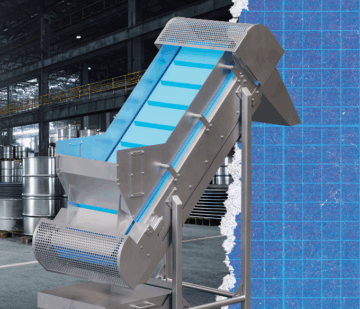
- CIP (clean in place) belt cleaning: Using automated systems that spray sanitized water and cleaning agents onto your chosen conveyor belt to remove residue and contaminants without stopping production and limiting downtime. CIP systems are vital for food hygiene as they reduce downtime, human labor, and any risk of cross-contamination.
- Auto belt tracking: These self-adjusting systems use sensors and actuators that keep conveyor belts centered, preventing misalignment and manual intervention. Auto belt trackers also reduce spillage.
Stainless steel construction: Food production machinery is designed from stainless steel due to its hygiene, corrosion-resistant, and durable material that prevents bacterial growth and contamination, whilst withstanding harsh cleaning, high temperatures, and physical wear. - Secondary operations integration (e.g., flip, seal, label): These integrated automated sealing systems ensure that food products are closed, protecting raw food and pet food materials from contamination. These tamper-evident labels and seals build customer trust and prove that materials have not been tampered with during transit.
- Drainable slopes: The use of drainage slopes across food production systems ensures complete, immediate drainage that eliminates standing water and common sources of pathogens.
Ultimately, these features, such as clean-in-place (CIP) systems, drainable slopes, and stainless steel construction, minimize manual cleaning time and water use, eliminating residue traps, therefore directly reducing microbial risks and bacteria growth, ultimately reducing downtime.
Our food-grade conveyor designs at F.N. Smith support the safe handling of meat, dairy, bakery, beverage, and pet food products that remain in line with current hygiene regulations.
Your Problems End Where Our Solutions Start: Integrating Hygiene Standards into Every Design Decision
Integrating design specifications that adhere to food hygiene regulations is a vital way to prevent contamination, build customer trust, and prevent workplace and public harm.
Ready to add hygienic machinery solutions to your production line? To learn more, you can contact our expert team to enhance and support your food production.